No Time to Leave pt.1

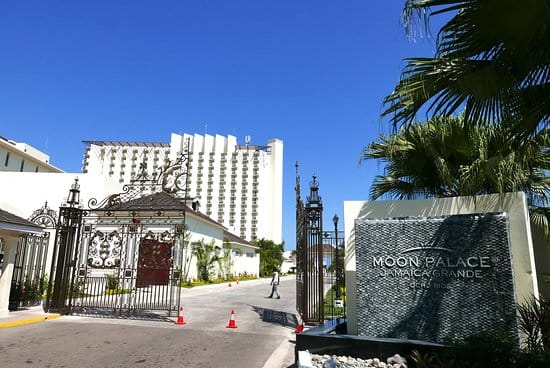
I'm a Palace Resorts member and can stay at any Palace property in Mexico or the Dominican Republic. After Hurricane Melissa struck Jamaica in late October 2025, 157,000 buildings were damaged, and an estimated 30% of GDP was erased, I deliberately chose Moon Palace Jamaica because the country needed recovery dollars, and I had them to spend.
Links to all parts (Part2) (Part3)
Part 1: Half a Mile
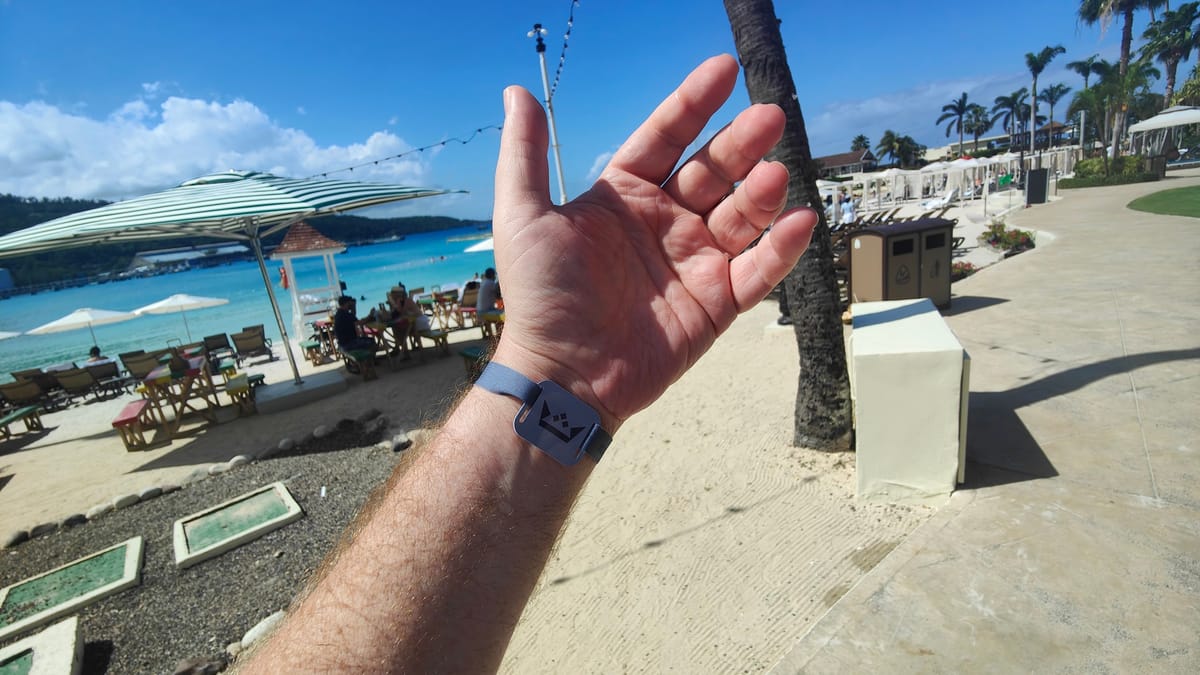
The wristband stayed on all week. At an all-inclusive resort, the wristband is the system: an RFID-enabled ribbon issued at check-in that serves as your room key, meal ticket, bar tab, and proof of belonging. If you take it off, the resort charges $150 a day to replace it. Not because the resort was extraordinary. Not because I didn't try to leave. It stayed on because Jamaica, the island I chose specifically to support after a Category 5 hurricane, made leaving irrational. The wristband entitled me to everything inside and made everything outside more expensive, more difficult, and less logical by comparison.
I have seen Dr. No at least a dozen times in my life. I am a James Bond obsessive, and Dr. No was the first film, shot on location in Jamaica in 1962, the year the country gained independence. Nearly every outdoor scene was filmed in and around Ocho Rios: Laughing Waters Beach, Dunn's River Falls, the reef at White River, and the pier that became Crab Key.
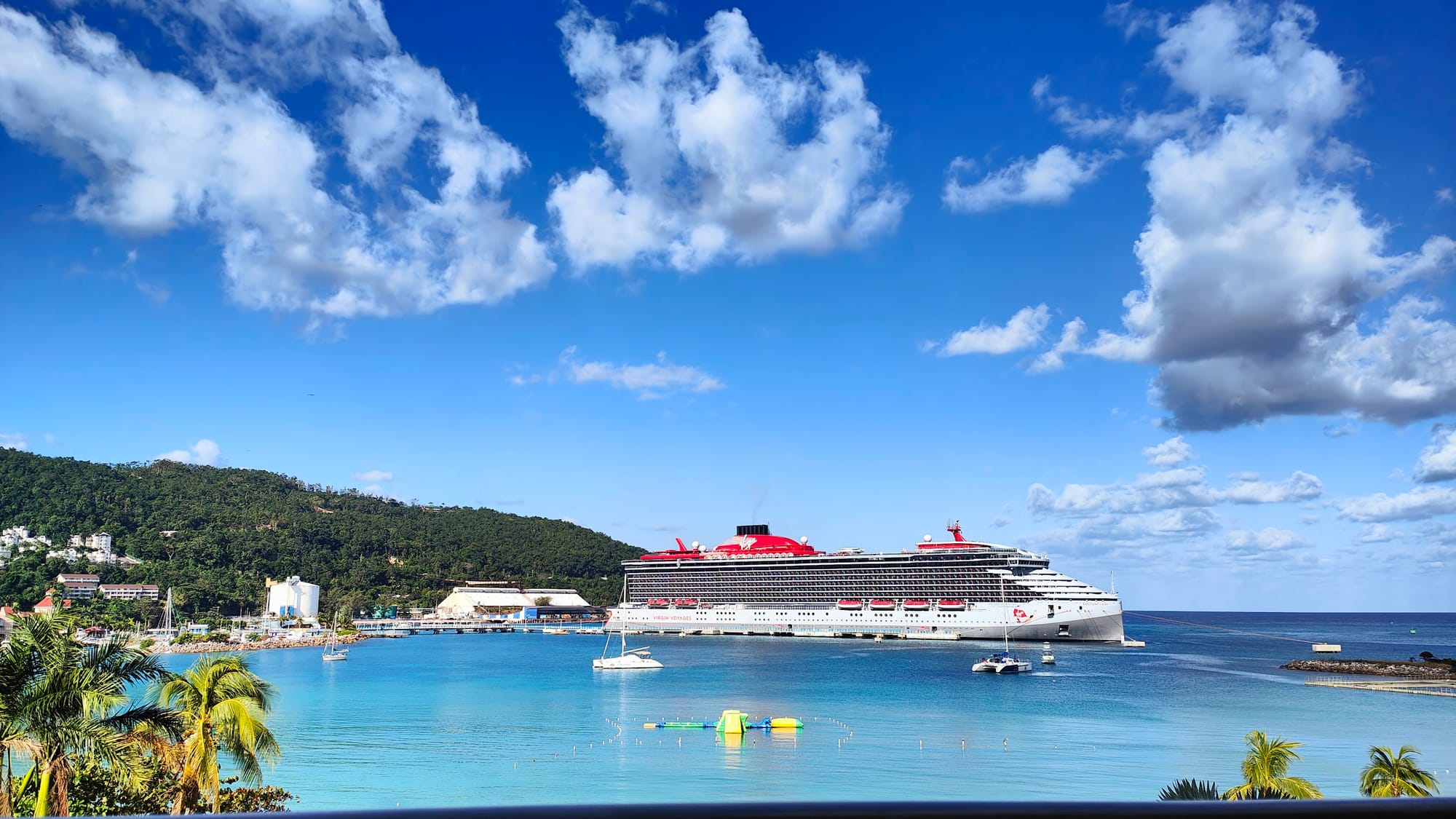
That Jamaica has lived rent-free in my head for decades — the turquoise water, the ease of movement, the sense that a man could walk into any bar in any country and belong. My wife and I first came to Ocho Rios roughly twenty-five years ago, early in our marriage. Part of me expected the same island. Part of me expected the one Bond promised. I came back to the exact place they filmed it.
In Jamaica, the disparity is what shocks you. The wristband does not just feel convenient. It feels rational because the non-wristband alternative relies on friction, hidden costs, and participation penalties.
I wanted to spend time outside the resort gates. Jamaica made that difficult.
Not dangerous.
Not hostile.
Difficult, in the quiet way that makes a traveler with options decide not to return.
In Jamaica, friction is not an accident. Whether it is engineered or simply left uncorrected, the result is the same — and the system profits from it either way. At a certain point, the distinction between engineering and indifference ceases to matter. What matters is that no one with the power to fix it has cared to do so.
The Fantasy and the Diagnosis
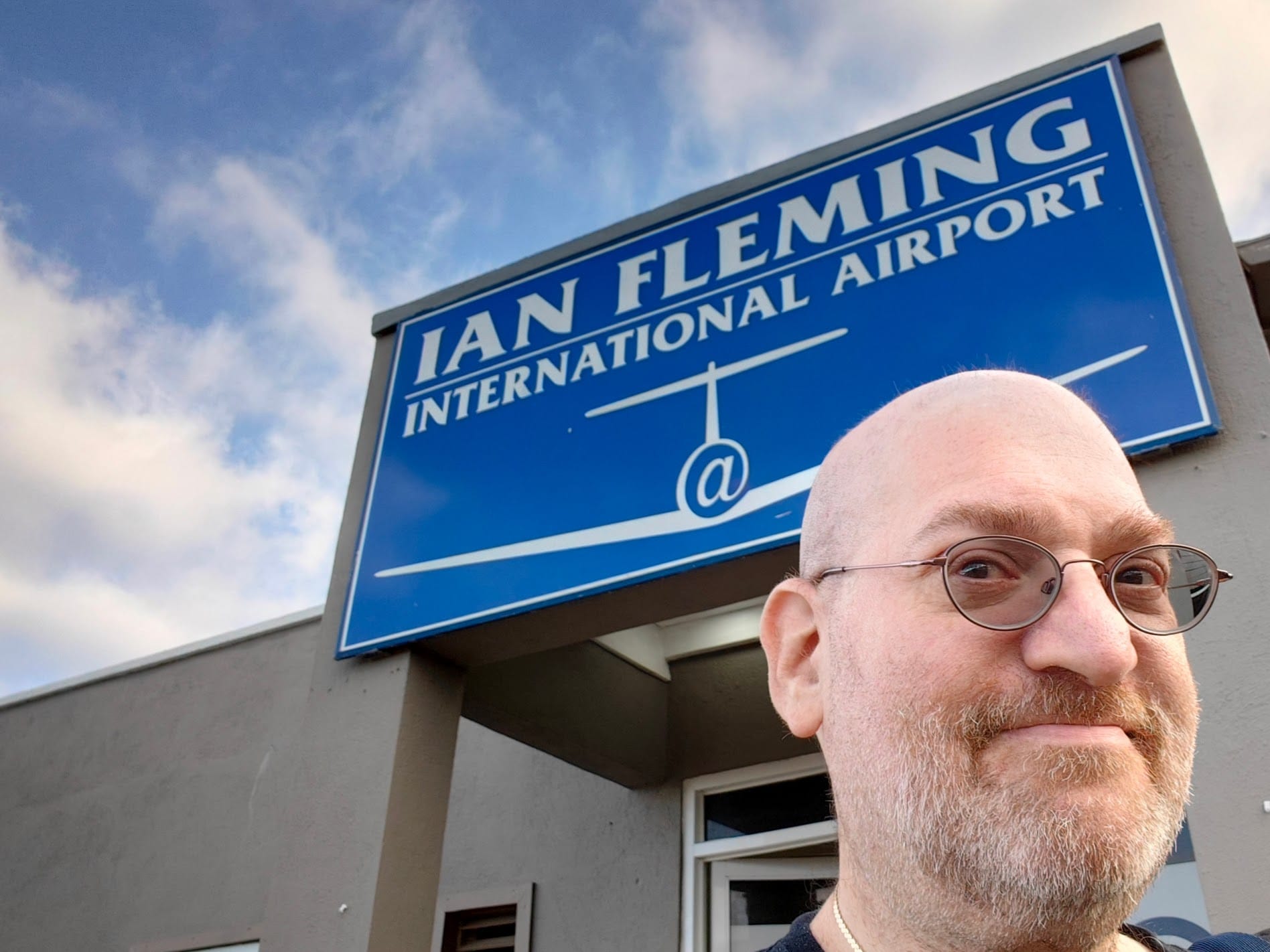
The real Jamaica still trades on the Bond fantasy. The regional airport in Ocho Rios is named after Ian Fleming. His estate, GoldenEye, is now a luxury resort most Jamaicans could never afford to enter. The island markets Bond as though 1962 were still the product.
But Jamaica also markets Bob Marley. If Bond is the island's fantasy, Marley is its conscience — the reggae musician whose voice became the country's most recognizable export, and who remains as close to a secular saint as any nation has produced.
Bond promised a world of open access where a man walks into any town, any bar, and simply belongs.
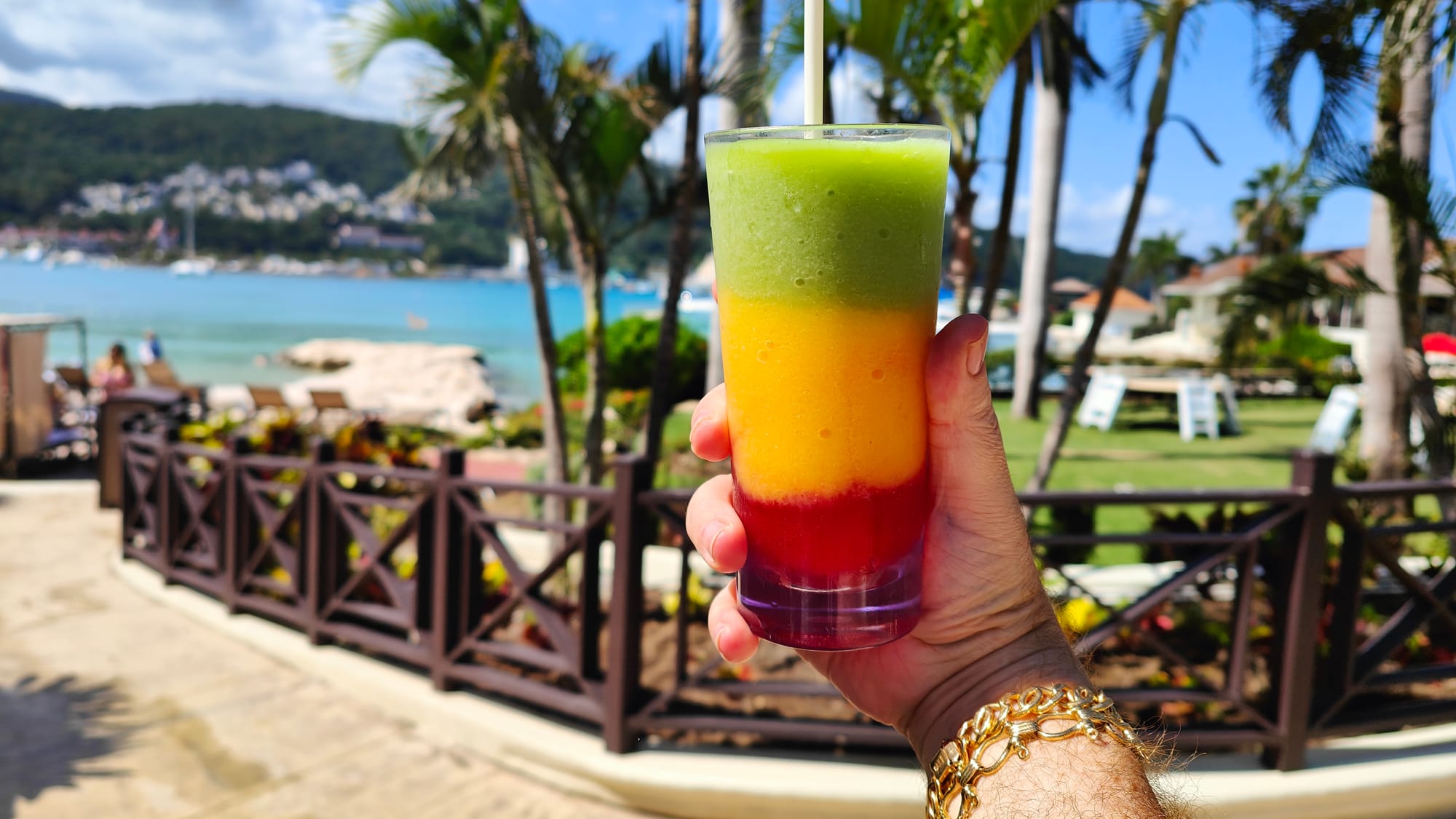
In his music, Marley warned about the system that would replace it – Babylon. A central tenet of the Rastafari faith, Babylon is the structure that extracts from the powerless while insulating the powerful.
Jamaica put both men on the brochure. One is fantasy. The other is the diagnosis.
Dr. No is sixty-three years old. Jamaica in that film no longer exists. And the visitor who arrives expecting the Bond version — free-moving, accessible, textured with local life — finds something closer to the one Marley was singing against.
The Participation Test
I wanted to participate. I tried.
My first attempt to leave Moon Palace for the Ocho Rios Jerk Centre — a restaurant on DaCosta Drive, half a mile from the lobby — cost $40 round-trip by taxi. A third of that walk is through the resort's back-of-house corridor: loading docks, employee parking, concrete service buildings, none of it landscaped, none of it meant for guests to see. The rest is a short stretch of broken sidewalk to the main road. Forty dollars, firm, for a distance you could cover on foot in ten minutes if the resort hadn't made the walk feel like trespassing. The driver would wait. Not negotiable. Not a starting point. There was no alternative rate, no meter, no posted fare. Just a number and an attitude that made clear the transaction was not designed to be refused.
I asked the resort to arrange a different driver for us. They would not. The resort controls gate access. The taxi operator has the contract. The rate is the rate.
This is not incidental. In December 2024, Senator Janice Allen, Jamaica's Opposition Spokesman on Tourism, told the Senate that foreign-owned hotels have increasingly marginalized local taxi operators and proposed mandating that hotels provide access to licensed drivers at no cost — an acknowledgment that they currently do not. The resort and the operator set a price that functions as a soft barrier to exit. Neither party has an incentive to lower it.
Informal or unlicensed cars wait on Main Street near the resort gate. To use one, a tourist has to walk a third of a mile through the resort grounds and get into an unmarked car with no meter and no accountability. Many visitors, understandably, won't do that.
Jamaica does have an affordable public transport system. Route taxis, identifiable by red license plates, operate on fixed routes with government-regulated fares. Locals use them to travel the same distances for about $1 USD per person. They run on the main road through Ocho Rios. Travelers who know they exist use them.
I did not know about them. Nothing inside the resort mentioned them. No sign at the gate pointed to a pickup. No concierge suggested them as an option. The only transportation the resort provided was its contracted driver at the contracted rate. A guest who relies on the resort for information — which is most guests — would never learn that a $1 alternative exists. Even if they did, route taxis run on DaCosta Drive, the main road just south of the gate. No sidewalk for the final stretch. No crosswalk at the intersection. No marked stop. No shelter. You would stand on the shoulder of a busy two-lane road and try to flag down a shared car at speed in the sun, with no certainty that one would stop. That is not a realistic option for a tourist couple, let alone a family.
So on two separate days, we walked. Out of the resort gate, down the road, into Ocho Rios on foot to shop, eat, and spend money in the local economy. We walked back. The roads between the resort and town are pitted and broken — crumbling sidewalks, where sidewalks exist at all, potholes, uneven surfaces. We did it in February during an unusual cool stretch, when the temperature never climbed above 75. In typical Caribbean heat, most tourists would not attempt it. But it was the only way to participate without either paying a 20x markup or climbing into a stranger's car.
Moon Palace is not one of the resorts that's far outside the town center. It is effectively in-town by Jamaican resort standards. We walked. Most resort guests in Jamaica cannot.
The Riu Ocho Rios sits in Mammee Bay, a 15-minute drive east with no sidewalk and no town to walk to. The Hyatt Zilara and Ziva properties in Rose Hall are seven miles from the Montego Bay Hip Strip, a $25–35 taxi ride each way with no sidewalk connecting them. At the Hyatt, a $30 taxi covers seven miles. At Moon Palace, a $40 taxi covers half a mile. The pricing is not distance-based. It is capture-based.
At these resorts, the question of whether to leave is not a matter of incentives. It is a matter of infrastructure. There is nowhere to go, no affordable way to get there, and nothing visible between the resort gate and the highway. The wristband is not competing with the local economy. It has replaced it.
The choice facing every guest at every resort in that corridor is identical:
Pay the premium.
Step into uncertainty.
Or stay inside.
Most guests stay inside.
The containment deepens for guests who don't just buy vacations but progress through membership systems. I'm one of them. Palace Resorts members earn tiered status that unlocks resort credits redeemable for premium liquor, upgraded proteins at specialty restaurants, spa treatments, and branded excursions, all on property. The more you invest in the membership, the more the resort has to offer you to keep you on property. At a certain tier, the rational calculation isn't just "the buffet is already paid for." It's "I have $500 in resort credit burning a hole in my wristband, and every dollar I spend off property is a dollar I'm leaving on the table."
The Man Who Should Be Winning
On our first day, as we attempted to walk into Ocho Rios, we met a man who introduced himself as Ricky.
He was fifty-six, born and raised in Ocho Rios. As we walked past it, he pointed out the school he attended as a child. He now lives up in the mountains. The hurricane took most of his house. He sleeps in the only usable room while the rest of the structure waits for repairs he cannot afford. He lost his mobile phone and cannot replace it, so he cannot reliably communicate with customers, coordinate work, or access the modern economy everyone talks about building.
He cannot consistently feed his family.
He was apologetic about all of this. Embarrassed, even, as though his circumstances were something he had done to us rather than something the storm had done to him. He kept saying he was sorry. For the state of the roads. For the debris still visible in places. For not being able to offer more. I had to tell him to stop apologizing.
Ricky makes his money doing odd jobs and guiding visitors around the town where he grew up. He is unlicensed. The licensed guides pay fees to the government, and they can call on the authorities to shoo people like Ricky away from the tourist areas. He is not failing to participate in the tourism economy. He is being actively removed from it so the credentialed economy can operate without him.
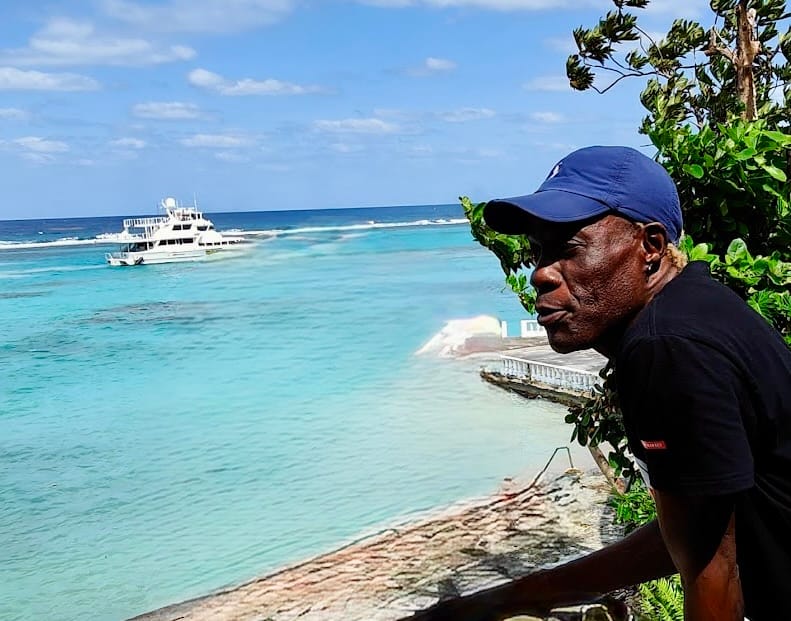
He was also one of the most capable local guides I encountered on the entire trip.
He started by walking us through Turtle River Park, where he identified plants, fruits, and herbs with authority: what was medicinal, what was edible, what was ornamental. He knew the grounds the way someone knows a place they grew up beside.
From there, he brought us to a street vendor cooking soup in a steaming pot on the roadside. Chicken soup was ladled into a Styrofoam cup, rich and peppery, the kind you eat standing up with no place to sit. Ricky stood beside us in his blue cap and green rugby jacket, talking to the vendor as if he were an old friend. We had a shot of overproof rum and cups of sorrel drink from another nearby vendor. None of this was planned. Ricky just knew where to go.
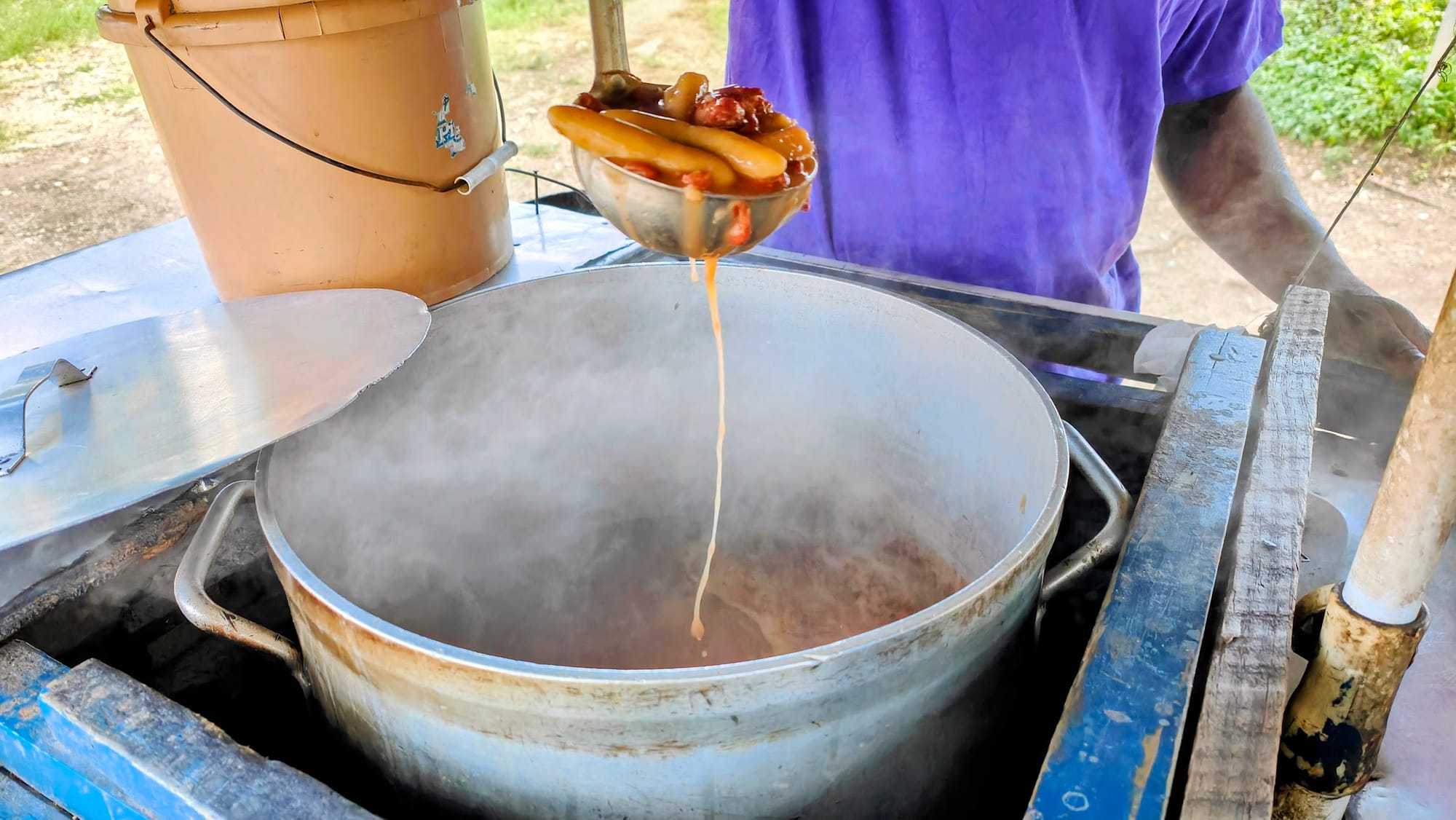
Then we stopped at Juici Patties, Jamaica's ubiquitous fast-food chain, the kind of place tourists walk past, and locals line up for. I had the chicken curry patty and told Ricky it was one of the best things I'd eaten all week. He smiled and told me he was a vegetarian.
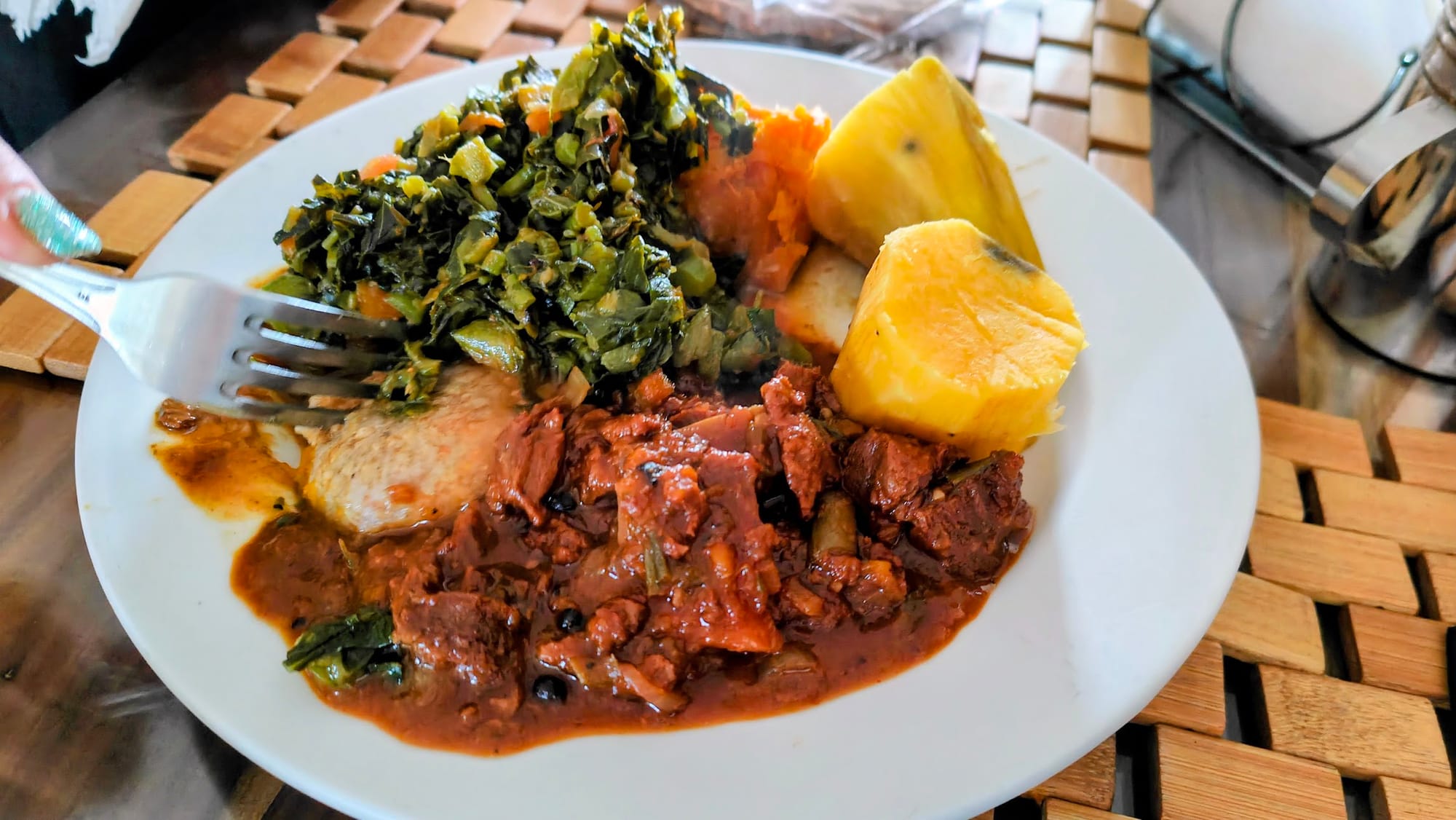
Our bus driver from the airport had mentioned Ital food, the Rastafarian dietary tradition, plant-based and natural, rooted in the culture. I asked Ricky if he knew of a place. He didn't hesitate. He led us through side streets to the Calabash Ital Rastarant on James Avenue, a clean, wood-paneled spot with Rasta flags on the walls, homemade hot sauces lined up on shelves, a handwritten menu of stews, soups, and fresh juices, and not a single tourist in sight. "Vegan Food For Life," the sign read. The plate that came out, callaloo, stewed vegetables, and yellow yams, all of it fragrant, unfamiliar, and good, cost less than a cocktail at the resort. Ricky watched us eat with the quiet pride of someone who had brought us to the right place.
From there, the afternoon kept unfolding. He took us into a local Chinese-run supermarket —a cavernous, warehouse-style store—cases of liquor stacked on open pallets, bulk goods on industrial shelving, more Costco or Sam's than a corner shop, with no merchandising. Chinese and Indian families have run stores like this in Ocho Rios for generations; they are the backbone of the town's merchant economy and will absorb the worst of the damage as the all-inclusive model continues to pull spending behind resort walls. Cases of overproof rum sat stacked in the open aisles. The nicer bottles, Appleton Estate and the aged rums, were locked behind the counter in a glass case. I looked at the prices and felt the first jolt: the rum was not cheap. Not tourist-markup expensive, but expensive in a way that did not make sense for a product distilled on the same island.
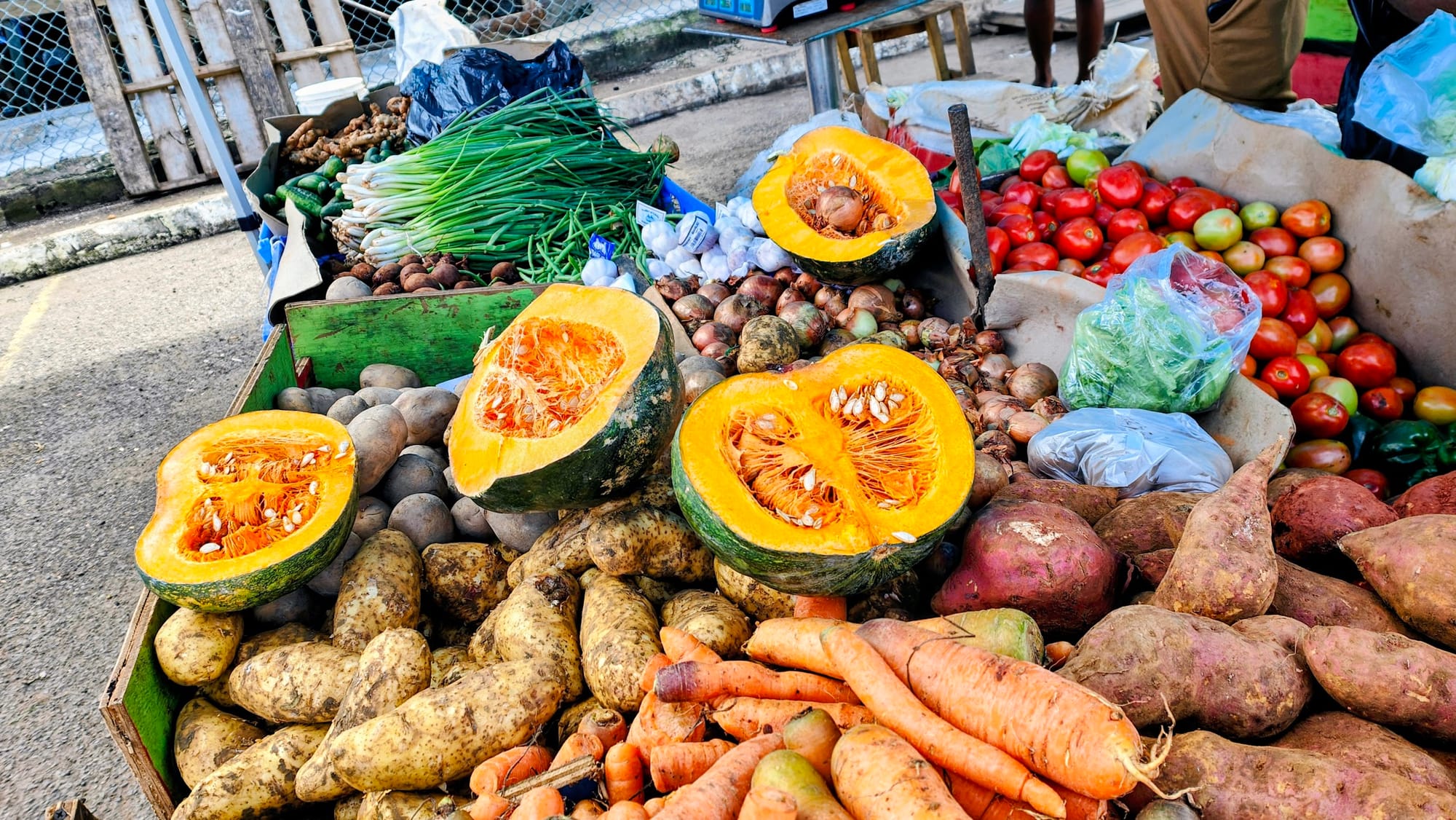
Then Ricky led us into the produce markets, open-air stalls under colored umbrellas, where vendors sold split pumpkins, scotch bonnet peppers, and fresh ackee from cardboard boxes. We bought star apples, which neither of us had tasted before, and ate them on the spot. We sampled everything. He navigated all of it without hesitation.
In a single afternoon, Ricky delivered exactly the kind of experience Jamaica's tourism marketing promises.
Authentic.
Local.
Cultural.
Human.
And then he brought us somewhere we never would have found.
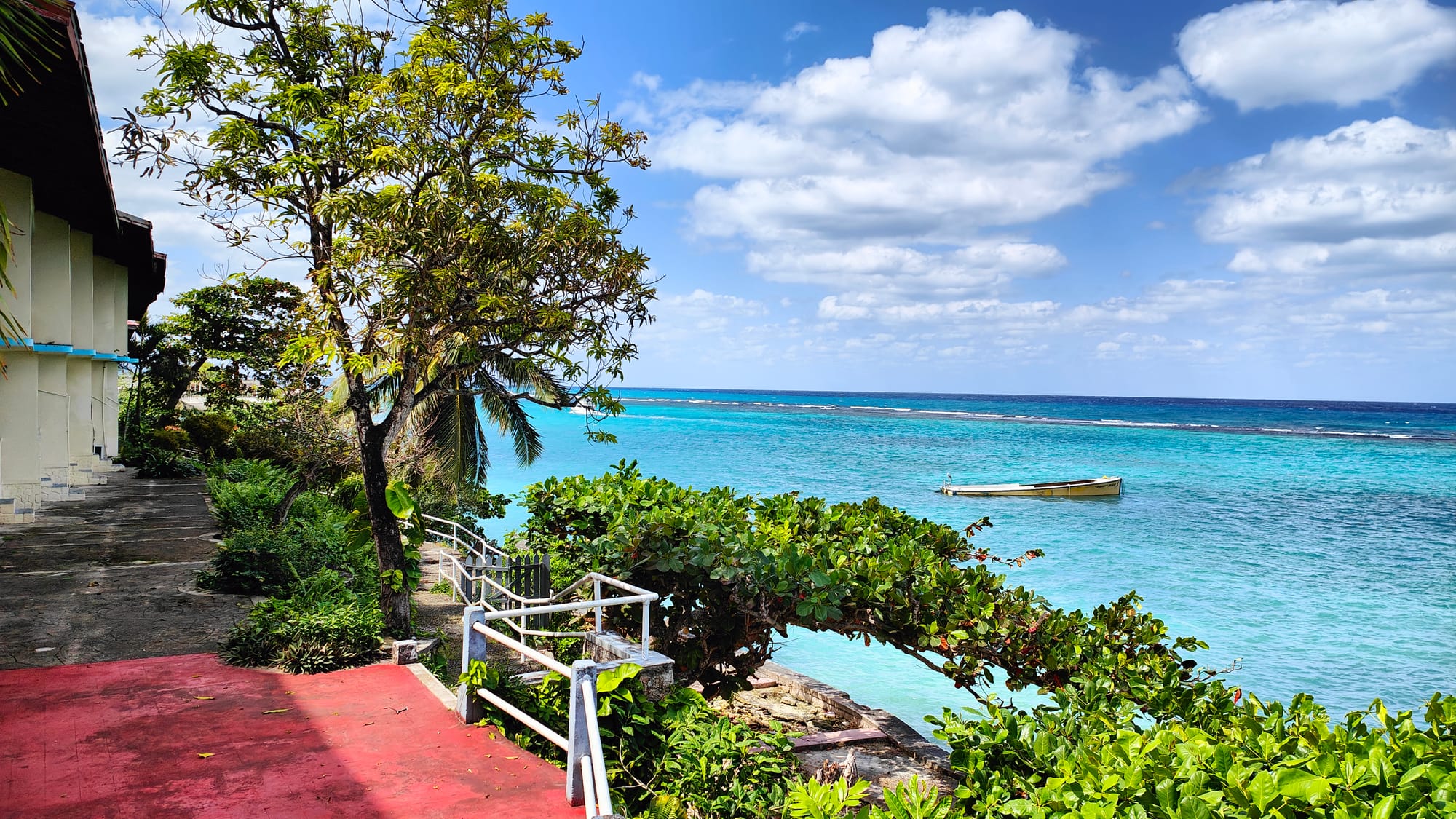
Three blocks from Moon Palace, tucked behind James Avenue, Ricky led us into the Silver Seas Hotel, a small, colonial-style property that has stood on the Ocho Rios waterfront since the late 1950s. The hurricane had hit it hard. The rooms were dark. The pool was drained. It could not accommodate guests. But the outdoor bar was functional, the staff was present, and the view from that red-painted terrace — over the old stone balustrade, past the sea grape trees, across a turquoise reef to the open Caribbean — was the most beautiful thing I saw in seven days on the island.
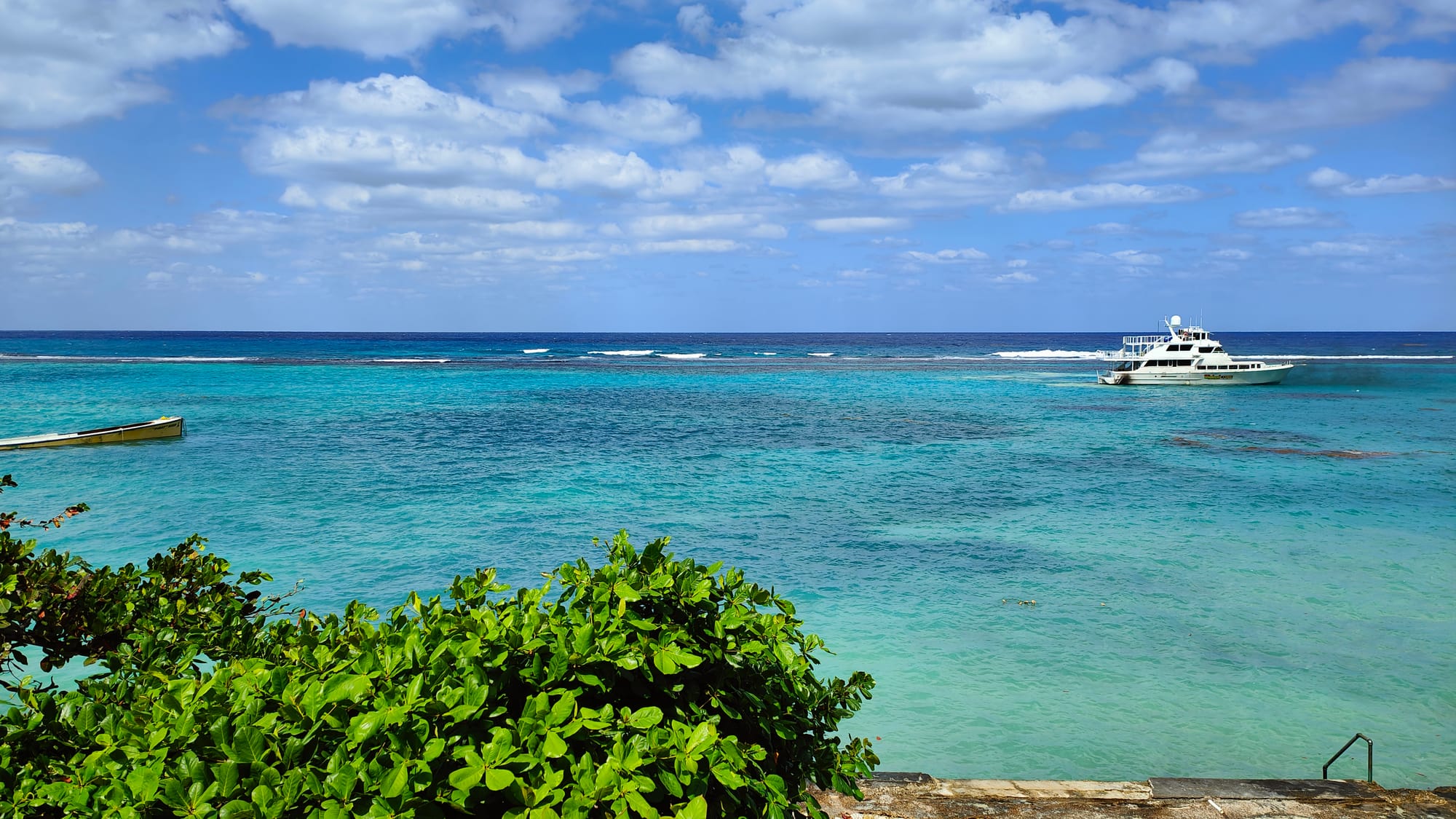
A small wooden boat sat in the cove. A cat wandered the steps. My wife and Ricky stood at the railing, looking out at water so clear you could see the reef structure twenty feet down. The hotel predates *Dr. No* by half a decade. It looked more like Jamaica in that film than anything inside the resort. And Ricky was the character every Bond film has: the local who takes you off the official map, knows the backstreets, and shows you the country the brochure can't package. Except in this version, the system was designed to make sure you never met him. This was not a resort experience. It was Jamaica unpackaged, unbranded, a three-minute walk from a $250 million all-inclusive, and completely invisible to anyone inside it.
We had to say goodbye to Ricky there. He had no phone, no way to exchange a number, no way to follow up, no way for us to send him a referral or a tip after the fact.
We paid him in cash for the afternoon and walked back to the wristband.
I think about him often. I have no way to reach him.