The Content Crisis: A Series

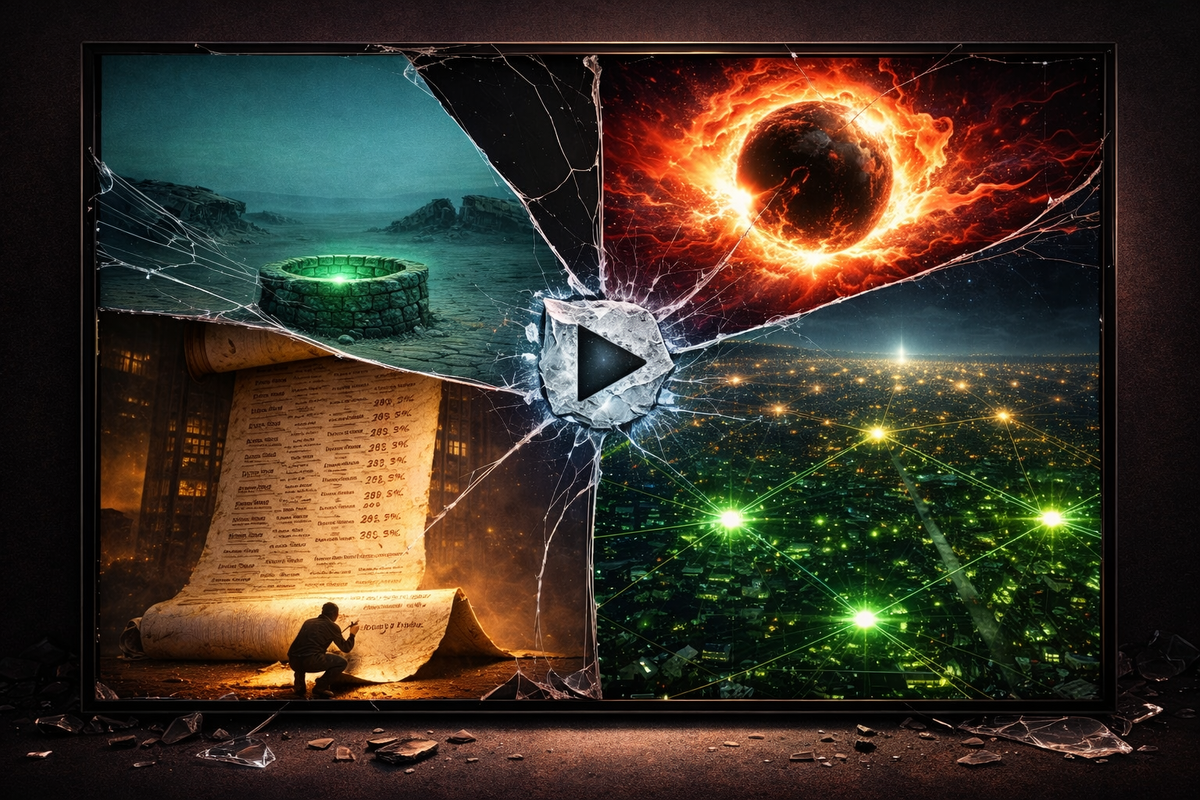
The content industry is broken. Not in one place. In four.
The pipeline that feeds it. The franchises it relies on. The contract between platform and consumer. And the infrastructure that delivers the stream.
If you work in media, entertainment, or technology, this series lays out what's structurally failing and what a viable alternative looks like. If you're a consumer who's tired of price hikes, cancelled shows, and a streaming experience that gets worse every quarter, this series explains why it's happening and what a better deal would look like.
This series examines each failure and proposes what comes next.
The Well We Never Tapped
Hollywood spent decades recycling the same franchises while thousands of unadapted literary science fiction properties sat untouched. The content pipeline wasn't empty. It was ignored.
- There are more unproduced, award-winning sci-fi novels than there are streaming originals across every platform combined. Why won't anyone adapt them?
- One streamer proved the model works. The rest watched and did nothing
- The development pipeline isn't optimized for discovery. It's optimized for the opposite
- The pipeline failure has a cause. And it isn't a shortage of ideas
If you greenlight content: your next hit might already be published and sitting on a shelf. If you watch content: the reason everything feels like a sequel is because it is.
The Heat Death of Your Sci-Fi Universe
Streaming's demand for volume strip-mined every major franchise to the point of exhaustion. Star Trek. Star Wars. Marvel. The creative energy is spent.
- There's a thermodynamic law governing franchise decay. This essay names it
- One franchise launched five concurrent series in the streaming era. What happened next was predictable
- The economics of streaming are structurally incompatible with the creative process that built these franchises
- A 2015 prediction about what streaming would unlock was correct in theory. Almost entirely unrealized in practice
- Something specific killed the slow burn. And it wasn't audience attention spans
If you manage IP: there's a mathematical limit to how much you can extract from a franchise before it collapses. This essay defines it. If you're a fan: the reason your favorite franchise feels exhausted is because it is, and the economics guarantee it.
The New Contract
The deal between streaming platforms and consumers is broken. Pricing is dishonest. The audience is excluded from greenlight decisions. Trust is gone. This essay proposes a new contract built from the consumer up.
- There's a restaurant chain that went bankrupt on the exact same pricing model every streaming service is running right now
- Netflix is spending $20 billion on content this year. The math on who actually pays for that is worse than you think
- Advertising paid for television for 60 years. The industry needs to say something out loud that it refuses to say
- Two platforms accidentally built the honest pricing model. Everyone else is doing it wrong
- Over 40,000 fans signed a petition to save a Star Trek show. Zero of them were asked to put money down. There's a mechanism that generates better signal with less friction. It already exists inside every streaming app's payment infrastructure
- Amazon built a system that let the audience greenlight shows. It worked. They killed it. The reason why should make you angry
- The audience can shape what gets made in ways that change the production budget by 5-10x. Nobody is asking them
- As of April 2026, a studio is literally tearing down sets worth tens of millions because it has no way to know what its viewers want
If you run a streaming platform: the pledge model generates demand signal that your current analytics can't touch, and it keeps the money in your ecosystem whether the show gets made or not. If you're paying $27/month: this essay explains why your subscription gets worse every year and what an honest deal would actually look like.
The New Engine
The infrastructure that delivers streaming is massively underutilized. This essay proposes a delivery architecture that gets cheaper as demand grows, and explains why the consumer contract from Part 1 has to be fixed first.
- The number that should terrify every streaming executive has nothing to do with content budgets. It's a utilization percentage
- $6.7 trillion is about to be spent building new infrastructure on top of existing infrastructure that's barely being used
- The real profitability divide in streaming isn't content libraries or subscriber counts. It's something nobody talks about at investor presentations
- We solved the core delivery problem in 2002. In a living room. The industry killed the solution for the same reason it kills most good ideas
- A company backed by Cisco has already deployed the first tier of the new architecture. It covers 55% of US broadband households. You've never heard of it
- There's a reason phone carriers let competitors use their towers. The same economics apply to streaming delivery and one company is already proving it
- AI makes this architecture greener, not less. The scheduling math is elegant
- The most radical tier requires something from consumers that no platform has earned the right to ask for. Yet
- Every delivery system in history has become more expensive as demand has grown. This one breaks that rule
If you run infrastructure: the edge model complements centralized compute by offloading content delivery, freeing capacity for AI and high-performance workloads. If you're a viewer: your home internet connection is 97% idle most of the time. This essay explains how that wasted capacity could make your streaming cheaper and better.